Which lead-intake decisions belong in an automated path?
Automation can support repeatable intake decisions when the business defines the questions, context, next steps, and the moments that need a person.
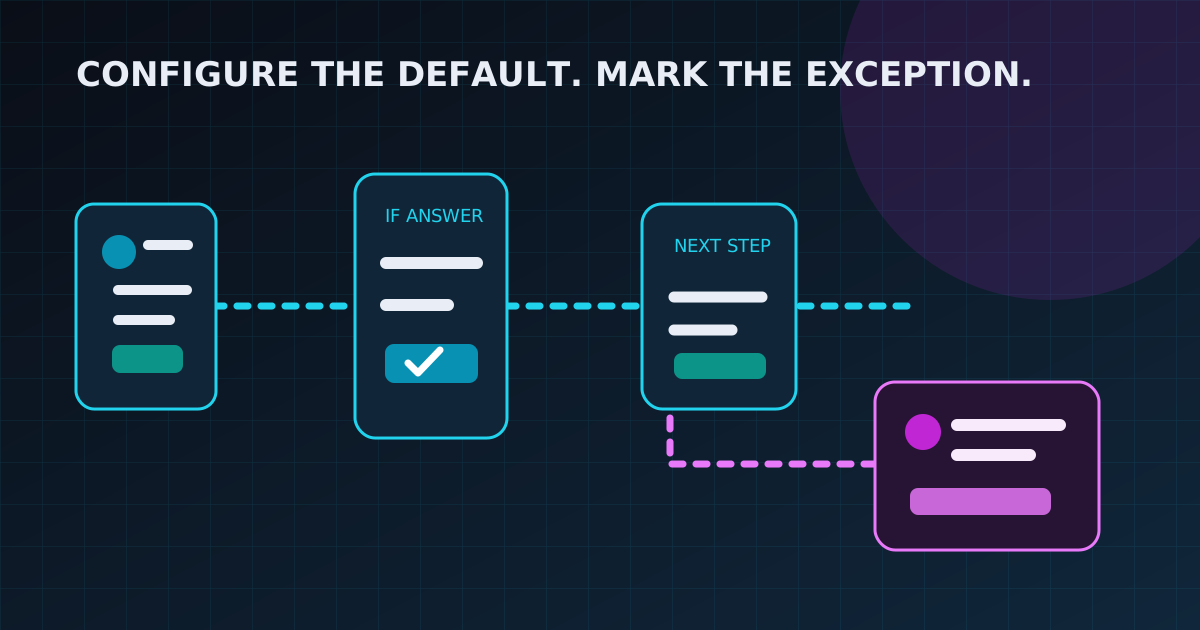
The decision to use an automated path is not a decision to automate every conversation. It is a way to make agreed, repeatable intake steps consistent while preserving a visible boundary for cases that need judgment. The business should decide that boundary before it treats a call flow as a finished design.
Start with decisions the team can state clearly
A useful automated path begins with questions and outcomes the team can define in advance. If a caller’s answer has a clear, approved next step, that decision may belong in the standard flow. If the next action depends on nuance, policy interpretation, or a relationship decision, it belongs on an exception path for a person.
- Use questions with approved, repeatable answer paths
- Capture the context that explains the selected next step
- Make the default owner or action clear for each standard outcome
- Route unclear or unusual conversations to a human exception
Design the exception as part of the path
An exception is not a failure of the flow. It is the point where the business intentionally asks for judgment. Make that point visible in the call design and preserve what was already gathered so the next person can understand why the conversation left the standard route.
The strongest automated path is specific about what it handles and equally specific about when a person should take over.
Review the boundary with the operating team
As questions, priorities, and approved next steps change, the team can review which decisions remain repeatable and which need a different path. That keeps automation tied to the actual operating model instead of asking a configured flow to decide more than it should.
Your Lead Data Bot helps B2B teams define repeatable inbound intake and useful automated lead context. See How It Works, explore the FAQ, or talk through your automated intake path.