Plan a “not sure” path for automated lead intake
“Not sure” can be a legitimate answer, not a reason to invent a category.
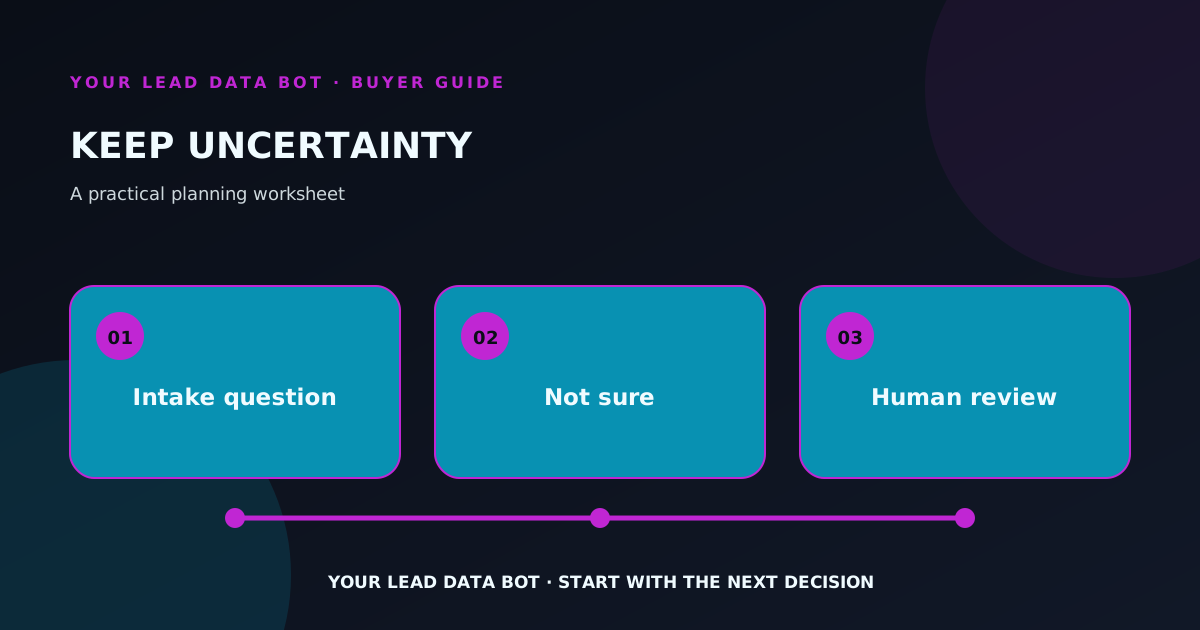
An intake question should not force a caller to guess. When “not sure” is a plausible answer, decide what minimal context should be kept and who should review the unresolved choice. This is a planning aid; it does not assert that a specific bot feature, alert, or destination exists.
Find the questions that invite guessing
Look at the options you plan to offer. Would a new customer know the difference between them? If the answer requires internal terminology or a fact the caller may not have, leave room for uncertainty. A forced choice can make the record look neat while hiding the caller's real need.
Illustrative: A buyer asks about a service but cannot say which of two internal product categories fits. A better intake note preserves the buyer's stated need and marks the category unresolved. It should not invent a product match or imply the request has been qualified.
| Planned question | Why “not sure” is plausible | Context worth keeping | Human owner if unresolved |
|---|---|---|---|
| A real intake question | Caller lacks the internal distinction | Their own words and safe contact path | Your actual review role |
Keep the branch honest
Decide what the caller should hear when the choice remains open. Can they give a short description? Is the next step a person, a later review, or a different question? Your business must choose this boundary before configuration. The automated path guide frames which decisions can be stated clearly; the exception review helps revisit ownership after an intake question changes.
Test the wording with a fictional caller who does not know your catalog. If the only way through is to guess, rewrite the question. To discuss the planned intake and its human exceptions, contact Your Lead Data Bot.